
Why home nasi goreng often turns soft instead of fragrant
Nasi goreng is Malaysia’s weeknight safety net: leftover rice, a few aromatics, and whatever protein is left in the fridge. Yet home pans often produce sticky clumps while the hawker wok smells toasted and lightly smoky. The gap is rarely a secret sauce. It is heat management, rice moisture, and how you layer seasoning.
Technique-focused cooks treat fried rice as a series of short, high-heat moves rather than one long stir. Guides such as the Serious Eats egg fried rice method keep returning to the same levers: dry grains, a properly preheated wok, and sauces that hit hot metal before they soak the rice. Those ideas travel well to Malay-style nasi goreng kampung, nasi goreng ayam, or a simple egg version.
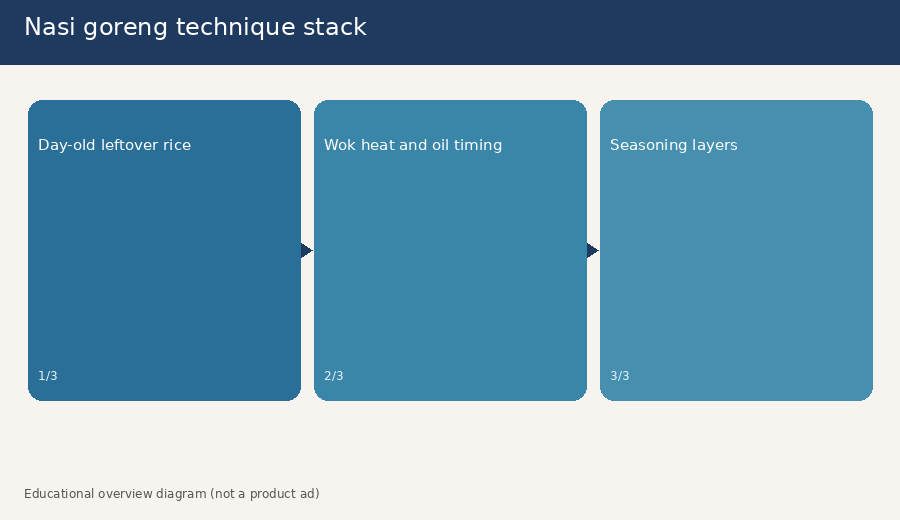
Leftover rice: dry grains, safe cooling
Day-old chilled rice fries cleaner because surface moisture has dropped and grains separate more easily. Fresh, steaming rice floods the pan and steams instead of toasting. If you cook rice the same day, spread it thinly, cool it, then chill briefly before frying.
Food safety matters as much as texture. Cooked rice should not sit in the temperature danger zone for long. USDA guidance on leftovers and food safety is blunt: refrigerate perishable leftovers within two hours, use shallow containers so food cools quickly, and reheat thoroughly when you serve again. For Malaysian kitchens that leave rice in a cooker on warm for hours, that habit is the opposite of good nasi goreng prep.
Break cold clumps with wet fingertips before they hit the oil. You want individual grains, not porridge bricks.
Wok heat, batch size, and home-stove limits
Commercial burners recover heat instantly. A home gas or induction hob does not. Preheat a carbon-steel wok or heavy skillet until it is very hot, add oil, and work in small batches if you are cooking for more than two people. Crowding drops the surface temperature; water then steams out and the rice turns pale and soft.
Press rice against the hot surface for a few seconds between tosses so edges pick up light toast. Push cooked bits up the cooler sides when you add eggs or protein. Keep the centre free to sear. If your kitchen fills with steam rather than a sharp sizzle, the pan is too full or not hot enough.
Collections of nasi goreng technique tips help when you want style ideas (seafood, ayam, kampung), but heat discipline decides whether any of those styles taste fried.
America’s Test Kitchen walks through leftover-rice science and high-heat fried-rice formula you can adapt to nasi goreng at home.
Seasoning layers: aromatics, then rice, then sauce at the rim
Build flavour in order. Start with oil and aromatics: bawang merah, bawang putih, cili, and sometimes belacan for a kampung profile. Add pre-cooked protein or prawns next so they warm without dumping water into a finished pile of rice. Then add the cold rice and toss until each grain is coated and lightly dry.
Seasoning should not land as a cold puddle on top. Soy sauce, kicap manis, or a thin sambal mix benefits from a brief contact with the hottest part of the wok. Drizzle along the rim so liquids reduce and brown slightly, then toss through the rice. Finish with spring onion and a squeeze of lime if you like brightness. Taste salt last; sweet soy already carries plenty.
This layering approach keeps nasi goreng savory rather than muddy. It also makes small recipe swaps clearer: change the protein or chili heat without rewriting the whole method.
Round the weeknight plate with breakfast ideas and sayur
A wok full of rice is filling, but a weeknight table feels better with contrast. Quick vegetable sides restore colour and crunch. Harvard’s Healthy Eating Plate keeps returning to variety and volume from vegetables across the meal, which fits a practical Malaysia plate: nasi goreng in the centre, plus a pile of greens.
Think tumis kangkung, stir-fried cabbage, or mixed sayur with garlic and a light seasoning. Browse resepi sayur sihat when you want fast side templates that do not compete with the wok for attention. Keep sides hot and brief so the rice stays the star.
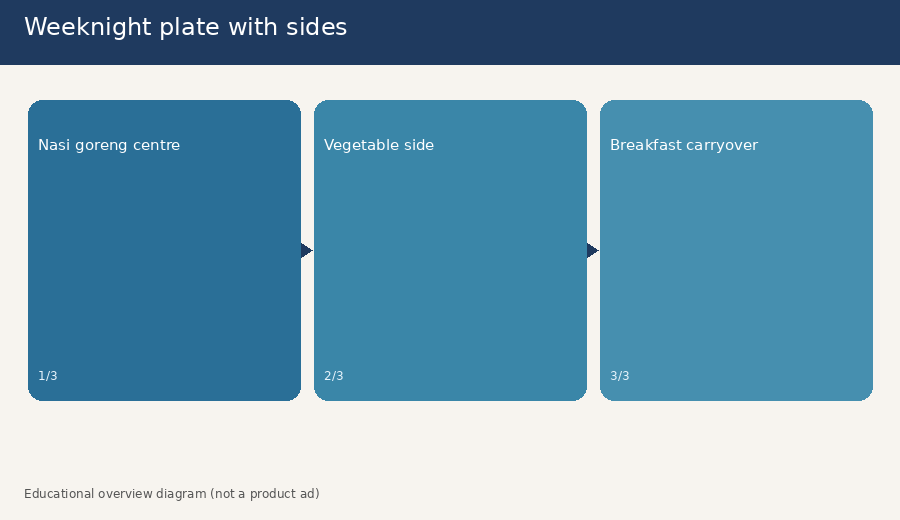
Breakfast planning helps the same kitchen. Eggs, leftover grilled chicken, or a simple toast-and-fruit plate can reuse chopping you already did for dinner aromatics. Looking through easy morning meal ideas is useful less as a shopping list and more as a reminder that morning protein and evening fried rice can share a fridge strategy.
A short checklist before you light the wok
Chill rice safely. Preheat until the pan is aggressive. Cook in batches if needed. Season at the rim. Add one sayur side so the plate is not only starch. That sequence will improve most home nasi goreng more reliably than buying another bottled mix.
When dinner is done, cool leftovers promptly again. Tomorrow’s breakfast or another round of fried rice starts with the same food-safety habit that made tonight’s grains fry clean.

Recent Comments